

Tick-bite fever is common in Africa, including South Africa, where it is known as South African Tick Bite Fever (SATBF). This fever is caused by a bacterium called Rickettsia africae, transmitted to humans through the bite of an infected tick. This blog will discuss the symptoms, diagnosis, and treatment of tick-bite fever.
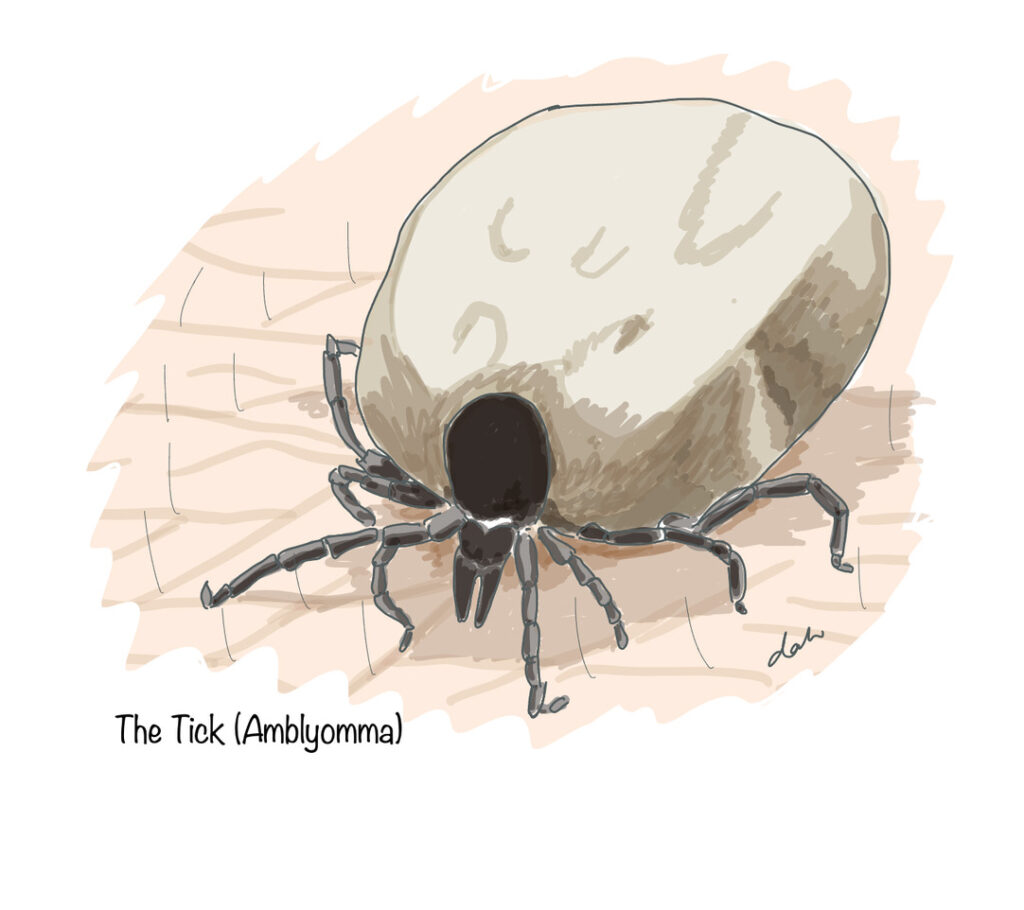
As the name suggests, tick bite fever is a bacterial infection transmitted through a tick’s bite. Ticks are the vector and get the disease from feeding on infected animals, wild or domestic. The life cycle of a South African tick typically consists of four stages: egg, larva, nymph, and adult. An adult female tick can lay several hundred to several thousand eggs on the ground or a host animal. The eggs hatch into larvae and then nymphs which feed on the blood of a host animal. These tiny baby ticks, sometimes called ‘pepper ticks’ because they are so small, can transmit tick-bite fever. Because they are challenging to see, they often go unnoticed. Nymphs will moult into adults; the male and female adults then mate, with the female feeding on a host animal before laying eggs and starting the cycle over again.
Symptoms:
The symptoms of SATBF usually appear within a week after being bitten by an infected tick. Some of the common symptoms of SATBF include:
- Development of an ‘eschar’ – a small dark brown or black scab at the bite site, surrounded by apparent inflammation. This can be found anywhere on the body, sometimes hidden in the hair, between toes or skin folds.
- Fever.
- Headache, which is often severe.
- Muscle aches and pains.
- Nausea and vomiting.
- Skin rash can vary from a few spots to being extensive, possibly involving the palms and soles.
- Lymph glands draining the bitten limb may be swollen and painful.
The symptoms of SATBF can be similar to those of other illnesses, so it is essential to see a doctor if you suspect you may have been infected with tick-bite fever.
Diagnosis:
A doctor can diagnose SATBF based on the symptoms and a history of a tick bite and clinically by the presence of an eschar with fever, headache, and a rash. Blood tests are not helpful in the acute phase of the illness as they are often falsely negative. Still, a PCR test of the eschar is beneficial to confirm the diagnosis a week or two later. A later blood test can also confirm the diagnosis by detecting the presence of antibodies to the Rickettsia africae bacterium.
Treatment:
The treatment for SATBF involves antibiotics, usually given for about 5-10 days. Antibiotics like doxycycline or azithromycin are the most effective in treating SATBF. It is essential to complete the full course of antibiotics the doctor prescribes, even if you feel better, before the treatment is complete.
Prevention:
Preventing tick bites is the best way to avoid SATBF. Here are some tips to prevent tick bites:
- Wear long-sleeved shirts and pants when you are in areas with ticks.
- Use insect repellent that contains DEET – these will repel ticks but do need to be re-applied every few hours. Herbal or homoeopathic remedies or citronella oil are not effective.
- Clothes that are impregnated with permethrin insecticide will also work to some extent.
- Once exposed to ticks, inspecting yourself and your loved ones for ticks is essential. Shower as soon as possible after being in areas with ticks. Remove ticks immediately if you find them on your skin. Ticks must be attached for a while to transmit the bacteria, so the risk of illness decreases if removed promptly.
- Dogs need protection with anti-tick and -flea products, inspected regularly and de-ticked as necessary. Do not crush such ticks, as very rarely, people who remove ticks from their dogs and destroy them can get a splash of blood in the eye or mouth and be infected this way.
To remove a tick, grip it, using a pair of forceps, if necessary, as near to the skin as possible. Ensure that the mouthparts, anchored firmly in the skin, are removed. Applying a lit cigarette or chemicals to the tick is ineffective and may injure the skin.
Conclusion:
South African Tick Bite Fever is a bacterial infection that can be transmitted through the bite of an infected tick. If you have symptoms of SATBF or have been bitten by a tick, you must see a doctor for a proper diagnosis and treatment. To prevent tick bites, take precautions in areas where ticks are common. With appropriate treatment and prevention, SATBF can be effectively managed.