
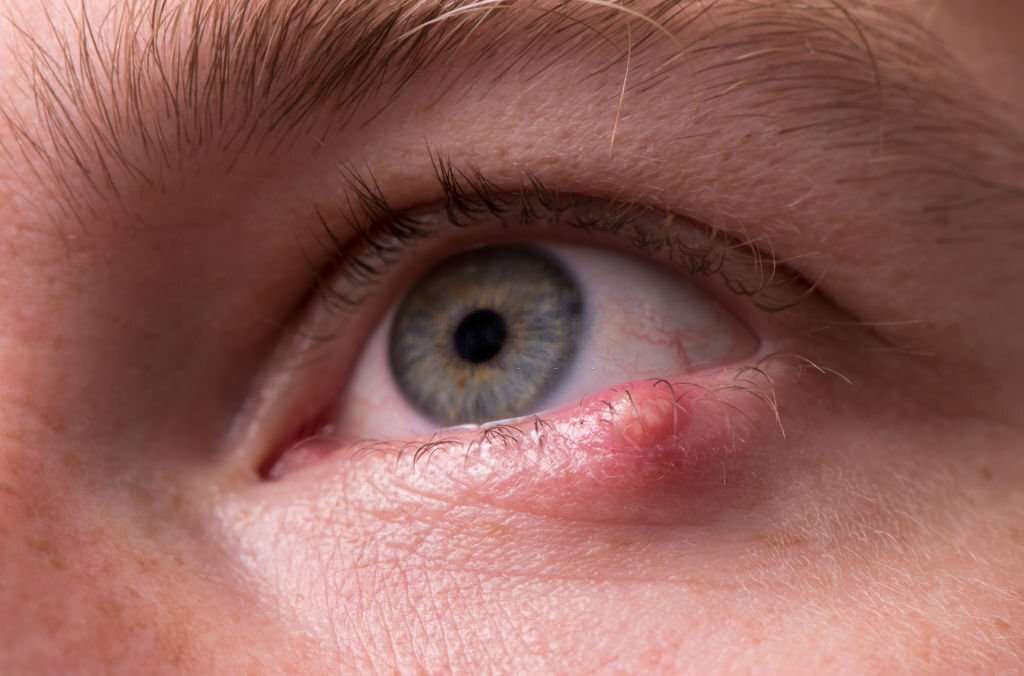
An eye stye, also known as a hordeolum, is a common eye condition that occurs when a gland in the eyelid becomes blocked and infected. While it can be uncomfortable and unsightly, styes are usually not serious and can often be treated at home. In this blog, we will discuss the causes, symptoms, and treatment options for styes, as well as some tips for preventing them from occurring.

Causes
Eye styes are typically caused by a bacterial (usually staphylococcus aureus) infection in the hair follicles or oil glands (Meibomian gland) of the eyelid. This can happen when the glands become blocked, usually due to a buildup of oil, dirt, or dead skin cells. Eye styes are more common in people who have a history of styes, blepharitis (inflammation of the eyelids), or who have a weakened immune system.
Symptoms
The most common symptom of a stye is a small, red bump on the eyelid. The bump may be tender to the touch and cause pain or discomfort. A small collection of yellow pus appears at the point where the affected eyelash comes out of the eyelid. (Pointing of the pustule). Other symptoms can include swelling, redness, and watering of the eye. In some cases, the stye may cause the entire eyelid to swell. If the stye is large or affects your vision, you should see a doctor.
Treatment
Various treatment options are available:
- No treatment: Most styes can be left alone as within a few days to a week, they tend to burst, release pus and then heal.
- Applying a warm compress to the affected area for 10-15 minutes several times a day can help to reduce swelling and relieve pain.
- Antibiotic ointment is used when the stye does not clear up or spreads.
- An oral antibiotic can be prescribed if the stye is particularly large or if it does not go away on its own within a week.
- The doctor releases the pus using a sterile needle into the “head” or pointing end.
- Avoid wearing contact lenses until the stye has healed, as this can further irritate the eye.
DO NOT SQUEEZE a stye.
Prevention
The best way to prevent styes is to practice good hygiene. This includes washing your hands frequently and avoiding touching your eyes or face with dirty hands. You should also avoid sharing personal items such as towels or makeup brushes with others. If you wear contact lenses, be sure to clean and disinfect them properly.
In conclusion, eye styes are a common and usually harmless eye condition that can be treated at home with warm compresses and good hygiene practices. If your stye is causing severe pain or affecting your vision, you should see a doctor. By following these simple tips, you can help prevent styes from occurring.