
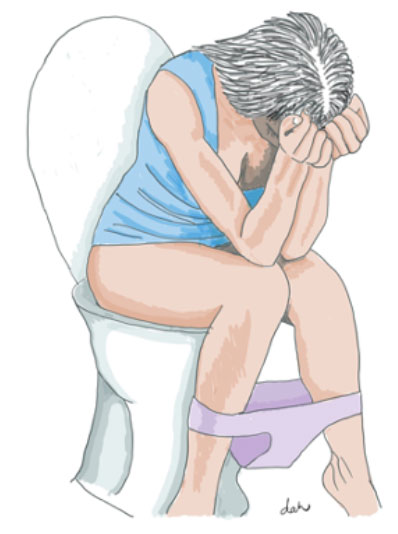
What is constipation
First off, constipation is not a disease. It is a symptom that something in the bowels is playing up.

Fig 1 Constipation
Constipation occurs when a person’s bowel movement becomes difficult because the consistency of the stool is hard or lumpy, and bowel movement is infrequent, with less than three bowel movements per week1. There is also a feeling of unsatisfied emptying of the bowel. Other possible symptoms may include an uncomfortable abdominal bloating discomfort, abdominal cramps and straining to pass stool, leading to sitting on the toilet longer than usual.2
It should be noted that the symptom of constipation emphasises the passage of hard stool and not necessarily how infrequent stools are passed. A person passing stool effortlessly every three days does not have constipation, whereas a person passing hard stool daily does.2

Fig 2. Symptoms of constipation.
Constipation causes
There are many causes of constipation, but it can often be linked to changes in an individual’s diet or routine. The result of these changes is that your colon absorbs too much water from your stool causing the stool to become dry and hard.1
The are several reasons found to be related to the onset of constipation:
- Not drinking enough water.
- Lack of fibre (whole grains, vegetables, fruits) in your diet.
- Low levels of exercise and physical activity.
- You don’t go to the bathroom when you need to – not responding to natures call!
- Change in routine such as travelling.
- Certain medications. Any medicine that you are taking should be suspected of causing constipation. The list of known drugs that can lead to constipation is long and can include; antacids, some blood pressure tablets, cough mixtures, iron supplements, antidepressants, anticonvulsants and some pain relief medicines. Not every drug in these groups cause constipation, only some; your doctor will be able to help here. There is a strong association with opioids, the group of pain killers that includes codeine.2
- The overuse of some medicines such as the high use of laxatives and the excessive use of pain killers.
- Ageing significantly increases the risk of constipation.3
- Thyroid disease.
- Depression, anorexia nervosa.
- People who have irritable bowel syndrome (IBS) have a higher risk of constipation.
- Lead poisoning.
- Bowel cancer.
What are the results of constipation?
Fortunately, in most people, constipation is a temporary problem and is not severe. However, prolonged or chronic constipation can cause stomach discomfort, rectal discomfort and bowel blockage. Bowel blockage is caused by the impaction of hard faeces in the rectum and lower colon, where the hard stool cannot now normally pass. When the bowel is blocked in this way, severe painful cramps set in. Over time the faeces above the blockage can ferment, causing liquid stool to seep down, leading to overflow incontinence of liquid wastes (spurious diarrhoea).

Fig 3. Spurious diarrhoea from constipation
Chronic constipation, if not treated, can also lead to other significant complications:
- Haemorrhoids – Swollen, painful veins in your anus.
- Anal Fissure – Torn skin in your anus.
- Faecal Impaction – Stool gets stuck in your colon or rectum and will have to be removed, either through the use of an enema or manually by a doctor or nurse.
- Rectal Prolapse – A part of the intestine falls from its normal position and protrudes from the anus.
How to avoid constipation & constipation relief
Include food that provides roughage and bulk, including a lot of high-fibre and whole-grain. Examples of foods include unprocessed fresh vegetables and salads, high bran cereals, fresh fruit and wholemeal bread. Keep the skins on potatoes and fruits (where possible) as skins are natural laxatives (prunes, figs, apricots and peaches).2
- Avoid low fibre foods – mainly found in junk food and other processed foods.
- Drink plenty of fluid. A rule of thumb is to drink 2 litres a day, especially water and fruit juices.
- Manage your stress levels.
- Stay active and ensure that you include exercise in your weekly routine. Even walking is good. Try and do 30 minutes daily.
- If you need to go to the bathroom – go!
How to treat constipation
Although constipation isn’t usually severe and can be treated with home remedies or lifestyle changes, it may require medical attention.
Managing constipation is, in essence, a process of retraining the bowels to re-establish a regular bowel habit. The first phase in managing constipation is to encourage a healthy lifestyle by establishing a regular high-fibre balanced diet. Drinking plenty of fluids is also essential, as is embarking on a regular exercise program.
If this first phase is unresponsive or constipation is too advanced, then medication to relieve symptoms and empty the bowels would be appropriate. There are four agents used to help this process:
- Volume-expanders: these agents work by absorbing water and increasing stool volume, which causes the bowel to stretch. Bowel stretching is a powerful stimulus for the muscles to contract. This is considered the most natural method but may initially cause bloating. Examples of these agents include Normacol, Agiolax, Fybogel.
- Faecal softeners: these agents act to soften the stool, which makes the stool easier to pass. They are slower to work and more gentle on the gut. They are more useful when used in combination with other groups. Examples of these include Duphalac liquid/powder, Movicol, Laxette.
- Gut irritants: these act by irritating the lining of the colon, triggering gut contraction. With time, these agents tend to be required in increasing amounts to remain effective, resulting in the patient eventually using large volumes to have a bowel action. Examples of this include Sennakot, Black Forest Tea, and many herbal or homoeopathic medications.
- The “quickfix” group: these are used to empty the bowel dramatically! They work by irritating the mucosa and dissolving the faecal material. They usually require the ingestion of large volumes of liquid to stretch the colon. They work very quickly (in several hours), requiring the patient to be close to a toilet. As they are salty, they may cause vomiting. Examples of this include Coloprep, magnesium citrate, Kleenprep and Go-lightly.

Fig 4. Management of constipation
Conclusion
If a noticeable change occurs in your bowel habit or you continue to struggle with constipation despite trying remedies, such as changing to a high-fibre diet, doing more exercises, and drinking more fluids, consult your doctor for advice. In doing so, you will receive expert advice and help to avoid any troublesome discomfort.
Contact The Vines Family Practice today to book your appointment!
References:
1. Symptoms & Causes of Constipation | NIDDK. Accessed July 23, 2021. https://www.niddk.nih.gov/health-information/digestive-diseases/constipation/symptoms-causes
2. Murtagh J, Rosenblatt J. John Murtagh’s General Practice. 6th Ed., 2015 Pages 454-462.
3. Gandell D, Straus SE, Bundookwala M, Tsui V, Alibhai SMH. Treatment of constipation in older people. CMAJ. 2013;185(8):665-670. doi:10.1503/cmaj.120819