
Osteoporosis is a condition that affects the bones, making them fragile and more susceptible to fractures. It is a common condition that affects millions of people worldwide, and it is more common in women than in men. In this blog post, we will discuss osteoporosis, what causes it, and how it can be prevented and treated.
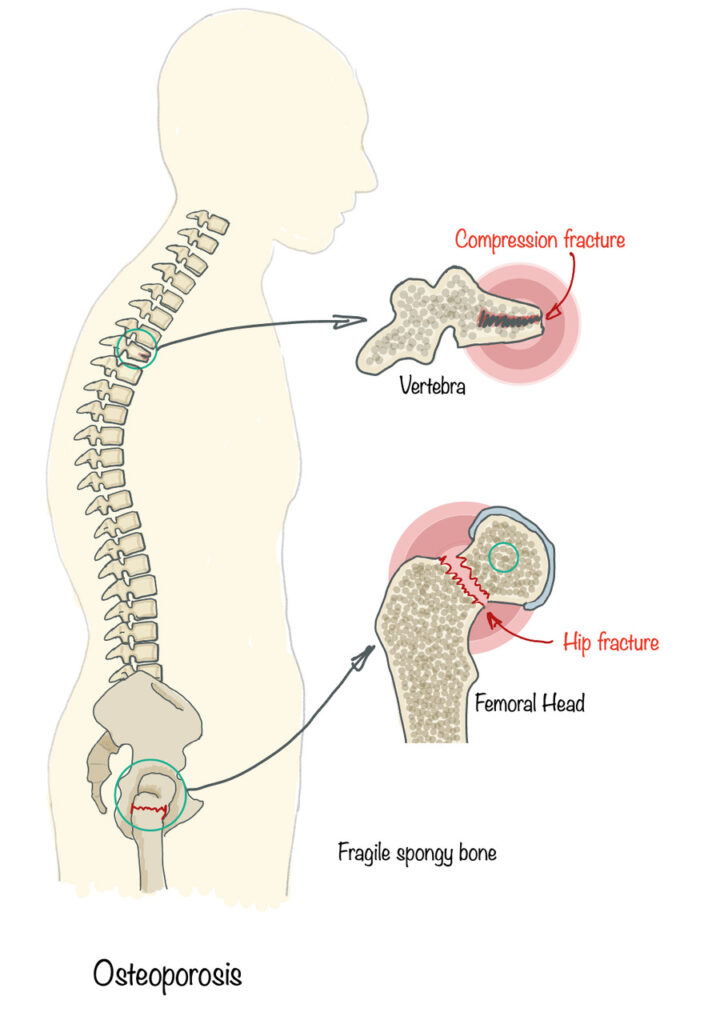
What is Osteoporosis?
Osteoporosis is a condition that affects the bones, causing them to become weak and brittle. The word “osteoporosis” literally means “porous bones.” When someone has osteoporosis, their bones are less dense and more prone to breaking. Bones that are affected by osteoporosis can break easily, even with minor falls or bumps.
What Causes Osteoporosis?
Osteoporosis is caused by a loss of bone mass and density over time. As we age, our bodies start to break down bone faster than they can build it up. This causes our bones to become less dense and more fragile. Other factors that can contribute to the development of osteoporosis include:
- Lack of calcium and vitamin D in the diet
- Lack of physical activity
- Smoking
- Excessive alcohol consumption
- Certain medical conditions, such as hyperthyroidism and inflammatory bowel disease
- Long-term use of certain medications, such as steroids and anticonvulsants
Preventing Osteoporosis
The best way to prevent osteoporosis is to maintain a healthy lifestyle. This includes getting enough calcium and vitamin D in your diet, exercising regularly, and avoiding smoking and excessive alcohol consumption. The following are some tips for preventing osteoporosis:
- Get enough calcium and vitamin D: Calcium is an essential nutrient for bone health, and vitamin D helps your body absorb calcium. Good sources of calcium include dairy products, leafy green vegetables, and fortified foods. Vitamin D can be obtained through sunlight, fortified foods, and supplements.
- Exercise regularly: Weight-bearing exercises, such as walking, jogging, and weightlifting, can help strengthen your bones and prevent osteoporosis.
- Quit smoking: Smoking has been linked to decreased bone density and an increased risk of fractures.
- Limit alcohol consumption: Excessive alcohol consumption can interfere with the body’s ability to absorb calcium and can increase the risk of falls and fractures.
Screening for Osteoporosis
The decision to undergo osteoporosis screening depends on several factors, including age, sex, medical history, and risk factors for osteoporosis. Osteoporosis screening uses the bone density scan (or a dual-energy X-ray absorptiometry (DXA) scan). This test uses low-level X-rays to measure bone mineral density in specific body areas, such as the hip and spine. The results of the DXA scan are then used to calculate the T-score, which compares bone density to that of a healthy young adult of the same sex.
The DXA scan is typically recommended for people at risk of osteoporosis, such as:
- Women over the age of 65 and men over the age of 70, regardless of risk factors.
- Women under the age of 65 and men under 70 with risk factors for osteoporosis, such as a family history of osteoporosis or a history of fractures.
- Postmenopausal women under the age of 65 who have additional risk factors for osteoporosis, such as:
- low body weight
- smoking
- sedentary lifestyle
- Individuals taking certain medications, such as glucocorticoids, for a prolonged period.
The frequency of bone density scans may vary depending on the results of the initial test and the individual’s risk factors. Generally, it is recommended to repeat the test every two years to monitor changes in bone density over time. However, the doctor will determine the appropriate frequency of testing based on an individual’s situation.
There are other tests that may be used for osteoporosis screening including quantitative ultrasound (QUS) and computed tomography (CT) scans.
Treating Osteoporosis
If you have been diagnosed with osteoporosis, there are several treatments available. The goal of treatment is to prevent further bone loss and reduce the risk of fractures. The following are some common treatments for osteoporosis:
- Medications: There are several medications available that can help prevent bone loss and increase bone density. These medications include bisphosphonates, hormone therapy, and denosumab.
- Calcium and vitamin D supplements: Calcium and vitamin D supplements can help strengthen bones and prevent further bone loss.
- Exercise: Exercise can help improve bone density and strength.
- Fall prevention: Taking steps to prevent falls, such as removing tripping hazards in the home and using assistive devices, can reduce the risk of fractures.
In conclusion, osteoporosis is a condition that affects the bones, making them weak and fragile. It is important to take steps to prevent osteoporosis by maintaining a healthy lifestyle, including getting enough calcium and vitamin D in your diet, exercising regularly, and avoiding smoking and excessive alcohol consumption. If you have been diagnosed with osteoporosis, there are several treatments available that can help prevent further bone loss and reduce the risk of fractures. Talk to your doctor to determine the best course of treatment for you.