
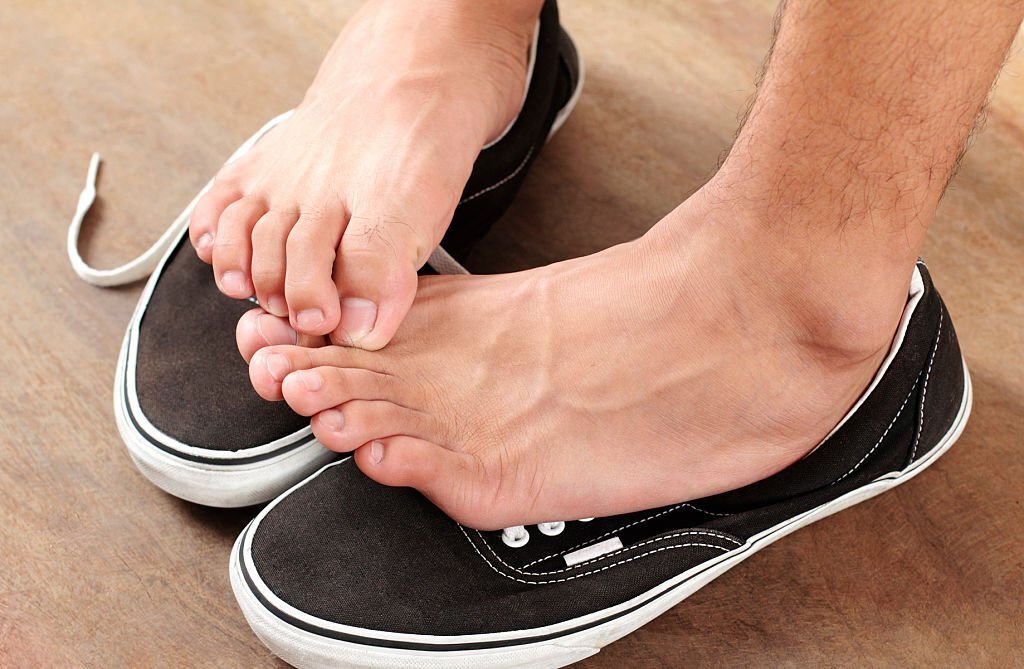
Athlete’s foot (tinea pedis) is a common fungal infection that affects the skin on the feet. This condition is caused by a type of fungus known as dermatophytes, which thrives in warm and moist environments such as locker rooms, showers, and swimming pools. Athlete’s foot can cause discomfort and itching, and if left untreated, it can lead to complications.
The infection is highly contagious and can spread through direct contact with an infected person or walking barefoot on contaminated surfaces. It can also spread through direct contact with infected surfaces or by sharing personal items such as towels or shoes with someone who has the infection.
Certain factors can increase your risk of developing athlete’s foot, such as having sweaty feet, wearing tight-fitting shoes, or having a weakened immune system. People with diabetes are also more susceptible to this infection due to poor circulation and nerve damage in their feet.
Symptoms
The symptoms of athlete’s foot can vary from person to person, but some of the most common symptoms include the following:
- Itching and burning sensation on the feet
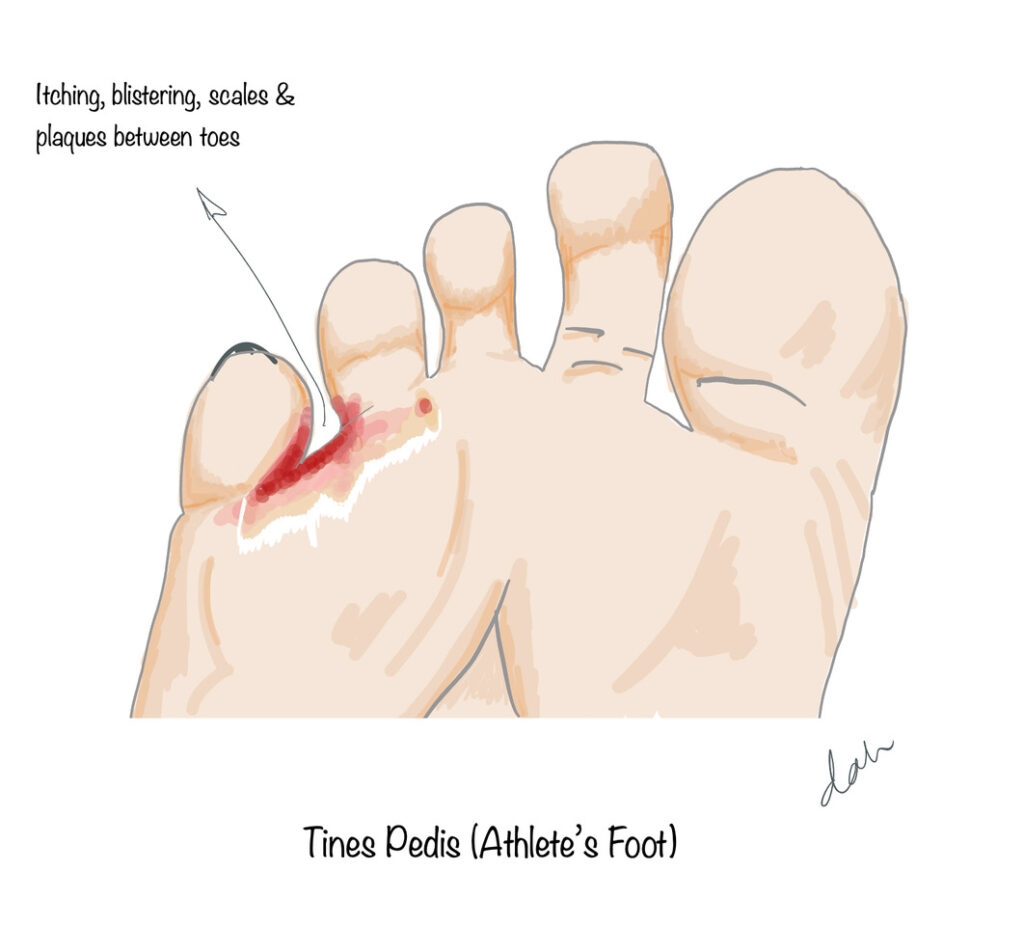
- Redness scaling or cracking of the skin between the toes.
- Blisters or ulcers on the feet
- Dry or flaky skin on the soles or sides of the feet
- Foul odour coming from the feet.
If left untreated, athlete’s foot can lead to secondary bacterial infections or spread to other body parts.
Diagnosis
Your doctor will likely diagnose tinea pedis based on a physical exam and a review of your medical history. He may also take a skin scraping to be examined under a microscope or to be sent to the lab for culture.
Treatment
Athlete’s foot, if mild, can be treated with over-the-counter medications or, if more severe, prescribed medications by a doctor. Some of the common treatments include:
- Antifungal creams or powders: These can be applied directly to the affected area to kill the fungus and relieve the symptoms.
- Antifungal pills: These are prescribed by a doctor in severe cases of athlete’s foot.
- Keeping the feet dry: Since the fungus thrives in warm and moist environments, it is essential to keep the feet clean and dry.
Prevention
To prevent athlete’s foot, it is important to take the following precautions:
- Keep your feet clean and dry, especially between the toes.
- Wear shoes that fit well and allow your feet to breathe.
- Wear moisture-wicking socks to keep your feet dry.
- Avoid walking barefoot in public places such as locker rooms, showers, and swimming pools.
- Do not share personal items such as towels or shoes with someone infected.
- Use antifungal powders or sprays on your feet and inside your shoes regularly.
- Alternate your shoes daily to give them time to dry out between wears.
Conclusion
Athlete’s foot is a common fungal infection that can be treated with over-the-counter medications or prescribed medications by a doctor. It is essential to keep your feet clean and dry to prevent the infection from spreading. If you experience any symptoms of athlete’s foot, it is important to seek medical attention to avoid complications. By taking preventive measures and seeking prompt medical attention, you can effectively manage and prevent athlete’s foot.