
What is cholesterol?
Cholesterol is a type of soft, waxy fat that is found in your blood. Cholesterol is an important essential component of cells, giving the body structure. If there were any way we could remove all the cholesterol from the body, the flesh would likely slither off the bones and lie as a pool of liquid on the floor.
Because cholesterol is an essential cell requirement it is produced naturally in the liver. You also get cholesterol from certain animal source foods, such as eggs, red meat, full-fat dairy products, etc – which is referred to as dietary cholesterol.
What are the risks of high cholesterol?
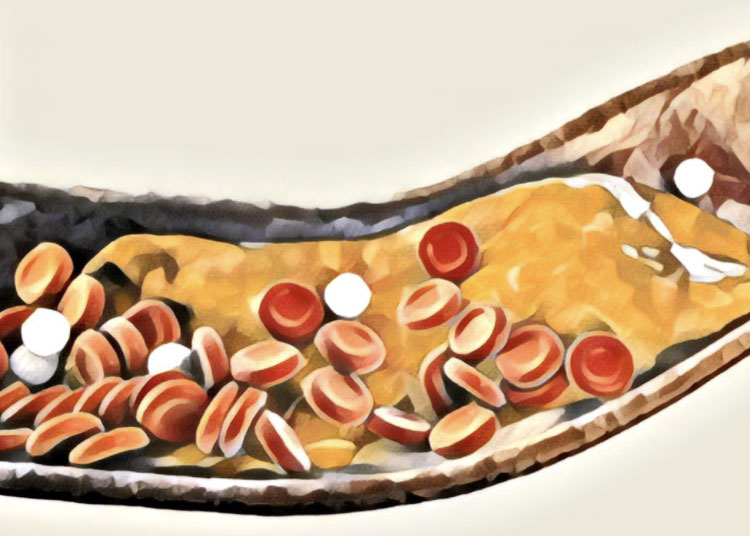
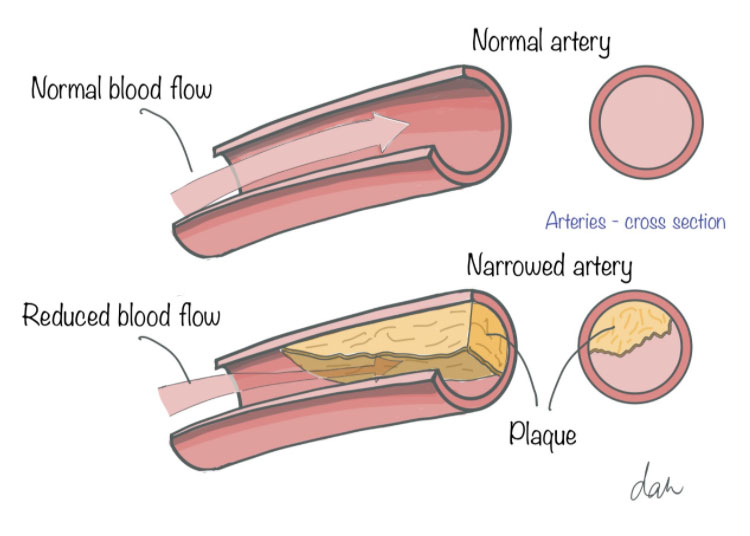
Having too much cholesterol increases your risk of suffering from a heart attack or stroke. This is because consistently high cholesterol levels slowly build up plaques in the inner walls of your arteries, narrowing the vessel, making it difficult for the blood to flow to your heart or brain.
“Bad” and “Good” cholesterol
There are several types of cholesterol, but the two main types are: low-density lipoprotein (LDL) which is considered “bad” cholesterol and high-density lipoprotein (HDL) which is considered “good” cholesterol.
LDL cholesterol in excess builds up in the walls of your blood vessels forming plaque. As the plaque accumulates it narrows the blood vessel reducing the blood flow (and in some cases, stops the blood flow altogether). This is the process widely associated with angina, heart disease and strokes.
HDL, on the other hand, helps clean your blood vessels as it returns cholesterol to your liver where it can be removed before it gets the chance to build up in your arteries.
The aim, therefore, is to have as little LDL (bad) cholesterol and as much HDL (good) cholesterol as possible.
Who is at risk of high cholesterol?
Several different factors can cause cholesterol, these include, but aren’t limited to:
- Elevated cholesterol can be inherited and therefore can run in your family.
- Having a lifestyle that includes a cholesterol-rich diet, limited exercise and being overweight.
- Your age can have an impact as cholesterol levels increase the older a person gets.
- Males also have slightly higher levels of cholesterol than females which makes them more prone to suffer from high cholesterol.
Cholesterol goals
Elevated cholesterol is often known as one of the “silent killers”. This is because you cannot feel if your cholesterol is elevated. People with high cholesterol have no symptoms and often feel perfectly healthy. The first sign of having elevated cholesterol is when you experience chest pain or a stroke, by which time the damage to your arteries has already been done. The plan, therefore, should be to have your cholesterol checked regularly to identify any problems so that preventive measures can be put in place.
Healthy cholesterol levels:
Knowing what your cholesterol level should be can be confusing. The reason for this is because the result of the total cholesterol includes the level of bad cholesterol, the good cholesterol and any other cholesterol. What this means is that you can have high total cholesterol that is actually good since the HDL (good) cholesterol dominates.
Alternatively, you can have a relatively low total cholesterol which is bad as the LDL (bad) cholesterol dominates. So what is more important is not the total cholesterol but the ratio of total cholesterol to the HDL (good) or TC:HDL. This should normally be under 4 and if it’s over 5 then the risks for heart or stroke problems are high.
To help in managing patients with high cholesterol, doctors often target the LDL (bad) cholesterol. If they can get it under 1.8 mmol/L (69 mg/dL) then the risks for heart disease are greatly reduced.
Another problem facing healthy cholesterol levels is current research. Opinions on cholesterol and its effects on cardiovascular disease are constantly changing and national and international guidelines can be modified – as often as annually. A cholesterol level, considered healthy one year, can be considered unhealthy the next when the guidelines change.
Measuring cholesterol
To ensure that your cholesterol levels are healthy, you can go to your local doctor and let them do a cholesterol test, also referred to as a lipid panel or lipid profile. Here the doctor will be able to measure how much “good” and “bad” cholesterol, as well as triglycerides (which is a type of fat), is in your blood.
Request an appointment at The Vines Family Practice

Or, if you prefer, you can also test your cholesterol levels at home by purchasing a Cholesterol Home Test Kit.
Managing cholesterol
Unless a patient has significantly elevated cholesterol, the main focus of treating a patient with elevated cholesterol is not necessarily to treat the cholesterol in itself but to manage the end result of what cholesterol does. High cholesterol is a risk factor for ischaemic heart disease (IHD) and stroke. We also have to take into consideration the other risk factors for ischaemic heart disease and stroke such as:
- Smoking
- Hypertension or high blood pressure.
- Obesity
- Diabetes or pre-diabetes
- Inactivity
- Having a close family member who has had IHD
- Age, older people get IHD more often than younger people.
To determine if long term medication is going to be of benefit it is appropriate to incorporate all your risk factors to establish what your overall risk is for IHD. Several methods have been designed to help determine a patient’s overall “Cardiovascular risk score” and we use these methods to help assess each individual’s need for medication.
Should it be found that your CV risk score is elevated and managing the cholesterol would be beneficial you will be encouraged to:
- Adopt a healthy lifestyle and habits:
Ensure that your weight (BMI) is in a healthy range, exercise more often, stop smoking, and avoid eating certain foods that boost your cholesterol levels. This reduces those risks outlined above.
- Get proper medication:
- The mainstay of treatment today is the group of medicines known as the Statins. These medicines slow down the production of LDL (bad) cholesterol in the liver. They include atorvastatin, simvastatin and rosuvastatin among others. They are very effective in reducing LDL. An uncommon side effect is uncomfortable muscle pains.
- Ezetimibe. Ezetimibe works by reducing the amount of cholesterol your body absorbs from your food. Ezetimibe is not as effective as statins and is more often used in combination with them. The medicine is well tolerated although some people may get a cough, diarrhoea or fatigue.
- Fibrates such as fenofibrate are more effective in reducing your triglycerides although they do have a lesser effect of reducing your LDL (bad) cholesterol. The side effects of fenofibrate are nausea, stomach upset, and sometimes diarrhoea.
- PCSK9 Inhibitors. These are a group of very effective, very expensive, injectable preparations, usually only used for people who have very high cholesterol (familial hypercholesterolemia), although they could be very useful in most patients should the price come down. The PCSK9 inhibitors include alirocumab and evolocumab. Injections are given every 2 to 4 weeks. Side effects include feeling cold, nausea, back and joint pain.
Conclusion
Having high cholesterol is a risk for developing ischaemic heart disease and stroke.
Effective management can significantly reduce this risk and help keep you safe. It’s best to check your cholesterol levels on an annual basis. This way, you’ll be able to detect high cholesterol early on and save you a lot of health complications in the future.
Need your cholesterol levels checked? Contact our Cape Town offices to make your booking!